Showing posts with label Trail Shoe. Show all posts

Saturday, August 2, 2014

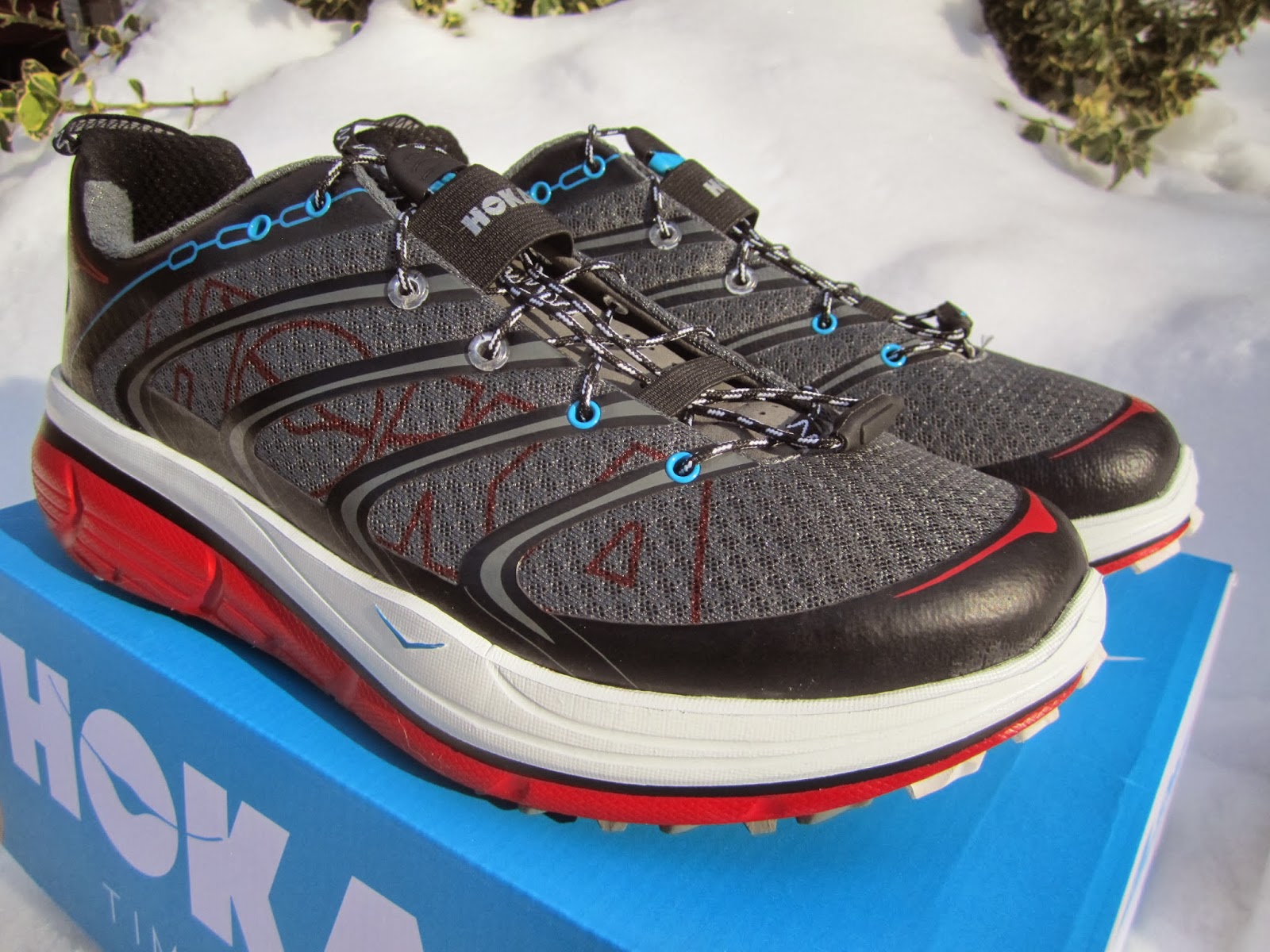
Shoe Review - Hoka Huaka


Hoka always has funny names for their shoe models.  This new one is no exception.  It is not pronounced "Who-A-Ka", but rather "Waaka".  So lets just get this out of the way right now:

Photo Credit - Muppet.Wikia.com
Waaka Waaka Waaka!!!  There.  You were all thinking it, now I've just said it.  So now, can we get onto the shoe review?

At the risk of repeating myself from previous posts, there is a certain type of shoe that I gravitate towards.  A flexible, light weight, low drop and well cushioned shoe is what I love to run in.  The Hoka Huaka fits that bill to a T. (Note: these shoes were provided as a media sample to me at no charge by Hoka One One).

Two or three years ago, this was exactly what I was looking for but nobody had put the two types (minimal and well cushioned) together.  For this review, lets just start at the front of the shoe and go backwards from there.

The green toe cap reduces volume a bit, but not in a bad way.  Feels performance oriented.

The toe box is wider than most Hokas, certainly wider than the Rapa Nui or the Stinson, but not quite as roomy as the Bondi.  One thing worth noting is that the height of the toebox is more performance oriented and is fairly snug in that regard.  The shape feels more rounded than the other Hokas as well.  The shoe fits true to size. I have never had any pinky toe irritation like I have experienced with some other more severely tapered Hoka models.

Speed laces which I proceeded to remove shortly after getting them.

The shoe comes with Hoka's speed laces as well as a pair of traditional laces.  I have found in the past that I can't get as good of a fit with the speed laces so I cut them out after I took these pictures and replaced them.  I can get a fairly snug fit but I would consider the upper to have a medium amount of room.  The construction is very simple, with an airy mesh that has glued on welded overlays for support. 


The nice thing about the upper is that it is pretty flexible (really flexible for a Hoka). 

Heel cup inside...

and outside.

The heel cup doesn't have a stiff counter and flexes nicely with your foot.  The inside of the heel cup is well padded and very comfortable.  I think that the fit is very similar to the Pearl Izumi EM N1, but a tad bit looser overall.

Very thin tongue.

The tongue is a very thin piece of  Leather and mesh that is what I would call "semi-lasted".  It is attached at the front of the shoe to the first three lace holes.  It has never has moved on me or let in a disproportionate amount of dirt and grit.


The all new RMAT sole is a thing of beauty.  Rather than the traditional squish of the Hokas built with EVA, the RMAT has a nice impact deadening feel with a great bounce.  This provides the best of both worlds.  It is much more performance oriented but it doesn't beat the hell out of your feet.  And it's lighter too!  Thats a win, win, and win. 

Hoka has this shoe listed on their website under both Trail and Road shoes.  I feel that is accurate as it is a true hybrid.  The traction is not stellar off road, but works fine for most circumstances.    There are three small areas that have little chevrons for grip, but they really don't do much in poor traction situations.  Running on the roads finds them to be smooth and grippy.   I have 62 miles on them at the time of this review and here is a picture of the wear so far.

Wear after 62 miles.

As you can see, the heel and toe chevrons are showing wear already, but nothing that I consider to be disappointing.  I expect a shoe like this to wear quickly if I run on the roads with them.  I would say that about 40% of my runs have been on trails, the rest on roads.  Much to my surprise, the three holes in the sole have never trapped any rocks.

To sum it up, my size 10.5 Huaka's are 9.7oz light...


Flexible...

Try THIS with any other Hoka.

Cushioned...


and extremely comfortable.  Although I have a ton of shoe reviews to do, I'm having a hard time not putting them on my feet before every run.  I have been waiting for this shoe for a long time.  Well done Hoka.

Here are the specs as listed on Hokas website.

Catagory: Neutral light cushion
Geometry: 2mm Heel offset - (Heel 27mm, Forefoot 25mm)
Weight: 8.9 oz (actual for my 10.5 was 9.7oz)
Construction: Ultra lightweight no sew speedframe with racelaces, full length RMAT midsole, early stage meta rocker geometry with 2mm offset and stregic hi abrasion rubber zones.
Price: $150

Friday, July 4, 2014

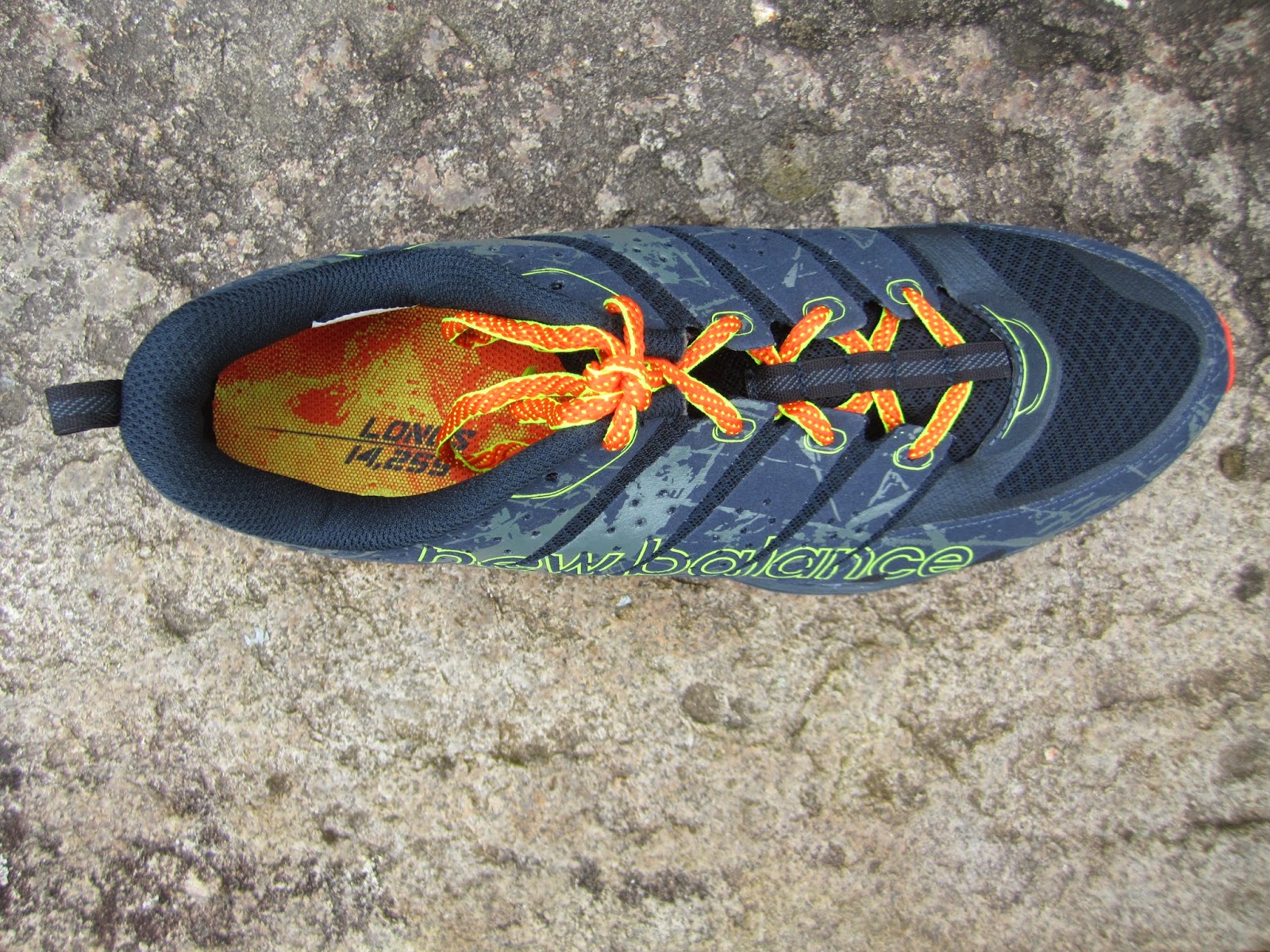
New Balance MT110v2 shoe review


Regular readers of this blog will know that I have had a love affair with the original NB MT110.  It was one of the most anticipated trail shoe and in most ways it didn't dissapoint.  It was an industry leader for a lightweight trail shoe and it is common knowledge that Anton Krupica called it the best trail shoe he had ever used.  Of course, no one shoe is perfect.  The biggest complaint about it was its durability.  The perforated plastic-like material was prone to tearing open if it came in contact with a sharp rock or stick.  How long they lasted really depended on what type of terrain they were used on.

But despite its faults, it had one very magical aspect for me.  The fit.  It was simply perfect for my foot.  Built on the NB minimus last (NL-1) it was as if the designers snuck into my room, cast my foot, and then built a shoe just for me.  And I know I'm not the only one who feels that way.

I have probably gone through 6 or 7 pairs since they first came out.  I love it for runs under 20 miles in the woods, even though I once used them for 70 miles of the Leadville 100.  If I was asked to design version 2, I would try to address a few things.  I would add some better traction.  I would change the outer material for more durability.  And I would add a bit more cushioning for longer runs.  From what I have read by many, my list of desired changes is a pretty common one.


When New Balance first announced and showed this new version a lot of people were surprised.  It looks nothing like the original.  With the different materials, much deeper lugs and a bit more cushioning, it looks like a perfect match for what I was hoping for.  The one thing that nobody understood was the change of last.  The V2 is no longer built on the minimus last.  I questioned that immediately, way before I ever held one in my hand.  I mean, the minimus design is what drew so many of us to that shoe (and the others built on the NL-1).   And it no longer looks foot shaped, it looks like a 1930's dress shoe with a super pointy toe box.


Hmmm....seperated at birth?

But sometimes looks are deceiving.  Unfortunately for me, this time they are not.  When I first put them on my feet, I could feel the tighter toebox immediately.  But as I've learned many times, the first impression standing in my living room doesn't nessisarily translate to how a shoe feels on the run.  So I headed out to the trails and put 15 miles on them.  My notes say: "First run in MT110v2.  Nice shoe, but the toe-box is too narrow." 


There are two areas that bothered my feet on this run.  You can see in the picture above how my foot fits on the footbed of the V2, next to the original version.  The addition of a footbed is another change on this shoe as the original didn't have a separate one.  The skin on the outside of my big toe, where my toenail starts, got "lifted" or sort of "torn" and my pinky toe, which is pretty small and short, again on the outside edge.  You can also clearly see the extra area in front of my foot which creates a dead feeling area at the front of the shoe.  Three days later I took them to Pats Peak to test their traction and see if I had better luck with the fit.  After only 7 miles I ran into the same problems.

Steep climb up the ski mountain.  Incredible traction!
Close up view

Being a bit bummed out, I decided to reach out to Brendan Murray, who I believe was the lead person at NB for the development of this shoe.  I explained that I was happy to see the shortcomings of the original addressed, but could not understand the decision to move to the PL-4 last.  He wrote me a very thorough explanation and then followed up with a phone call to help me explain better. I'm not going to post the entire email/conversation, but here is a small piece:

"Since we already had a 4 mm off-set trail model in our iconic minimus trail 10, we felt that continuing to make the 110v2 in the same fit and nearly the same stack heights would have been redundancy from our stand point and really limit the trail community with choices.  Futhermore talking with our ambassadors such as Tony, and their needs, they were asking for a slightly straighter lasted model in the forefoot - as ones foot needs adjust and change over time.  The idea of using the PL-4 last allowed for the trail runner who was seeking a lightweight trail model which provided slightly more girth in the midfoot and depth in the toe box, that the 10 didn’t, a new option.  The new 110v2 will also provide slightly more cushioning under foot (the trail 10 has a midsole specific stack height of 8/12 while the new T110v2 has a 10/14)."

He also gave me a perspective that I would have never considered.  He stated that although the original was extremely popular with the trail running community, they actually were not reaching the full sales potential based on their market research.  NB actually had a sizable amount of complaints regarding the NL-1 last for this shoe.  There is a visual look of a "hook" shape because of the way the shoe curves on the lateral side that actually prevented a lot of people from purchasing the shoe.  All of these factors led to the decision to change the last. 

Close up of lacing system, which does a good job at keeping the non-lasted tongue in place.

On the few runs that I took, my only problem was the toebox.  I want to like this shoe so badly.  The traction is awesome.  It seems to drain well.  It still retains that excellent balance of ground feel and protection.  They feel fast!  The materials seem like they will be far more durable than the originals.  If this shoe fit the way the original did I would probably have 500 miles on these things by now.

More cushioning than the originals

Here is what I suggest.  Forget these are the next MT110.  Consider them to be a new mountain/fells running shoe.  Try them on.  If they fit your foot shape and you liked the "running feel" of the originals, then you are psyched.  There are a lot of positive features of this shoe.  I just wish they fit me better.

9.8 Oz for size 11 (they fit a bit small, just like the originals.  Try the same size as what you wear in those (1/2 size up)

As a side note I also need to add that I don't like writing negative reviews.  I think that every shoe reviewer/blogger feels a sense of appreciation to any manufacture that has been kind enough to provide free shoes for review (which these were for me).  But I read too many reviews that are flowery bullshit because of that very fact.  I truly believe that the good manufactures listen and with enough feedback, make positive changes for the next version.  Sometimes they work and sometimes they don't.  Either way, I don't write these reviews for them.  I write them for you.  I will never stop writing honest reviews, with both the positive and the negative.  Obviously it is only from my perception.  Everybody's feet shape and needs for a shoe are different.  But my goal with reviews is to give exactly that, my opinion.

Call for comments:
Have you tried them?  What's your opinion?  

Friday, January 17, 2014

Hoka Rapa Nui 2 (Trail and Tarmac) Shoe Review


I don't know if I've ever anticipated getting a shoe longer than the Hoka Rapa Nui.  I first saw them on Karl Meltzers feet, then saw a post about them on Ian Corless' blog in August of 2012.  I was extremely intrigued.   I have had every single model that Hoka makes, eventually deciding that my favorite was the Bondi Speed.  I have run thousands of miles in Hokas, even naming the Bondi Speed my top trail shoe of 2012.  It was like a late Christmas present when I finally received a pair three weeks ago.  (Note: these shoes were provided at no charge by Hoka as a media sample).

Obviously the brand has grown huge amounts in the last 3 years.  Once an oddity, it seems that now they are the dominate player in the (super) long distance shoe market.  In reality, they created an entire new market and the response from runners falling in love with the pillowy soft cushioning has spured the industry to create a new segment.  It seems that the biggest trend for 2014 is the "Maximal" Cushioned shoe.

While all that was/is going on, Hoka has actually produced a shoe with LESS cushioning!  The Rapa Nui was designed as a faster, more minimal shoe for the racier crowd.  "Relevant" is the word that comes to mind, as the words "minimal" and "Hoka" really don't belong anywhere near each other.  Only in Hoka land can a 11.7oz (my actual weight of a size 10.5) shoe with 21/25mm of cushioning be considered minimal.  But, in relevance to their other offerings it is.


The Rapa Nui addresses my biggest concern with the other Hoka models, which is to much "squish". While the others feel awesome at first, I actually find that they cause a certain type of fatigue that no other shoe does.  Specifically, my hamstrings and periformus seem to get overwhelmed after very long runs in those shoes.   Unfortunately, this problem has led to several DNF's in races where I have worn Hokas from the start.  I have actually had races where I changed out of Hokas after 60-70 miles into a more traditional shoe and felt way better.  Knowing this, I changed my shoe strategy for 100 milers this year.  At the VT100, where I got 9th place with a PR of 18:53, I wore traditional shoes until mile 81.  Then I switched to my beloved Bondi Speeds and felt invigorated enough to run the fastest last 19 mile split in the 4 times I've run that race.  


So when I heard that the Rapa Nui had 1.5x the level of cushioning of a normal shoe rather than the usual 2.2x I was excited.  Could this be the shoe that strikes the perfect balance of maximal cushioning without being overkill?


I have read other reports that this shoe is more flexible than other Hokas.  Well, yes and no.  It is way more flexible than their thickest offerings, the Stinson Evo and Mafate.  Both of those rely on a rockered sole for a smooth ride.  The sole on both of those are quite stiff.  The flex on the Rapa Nui is similar to the Bondi.  Still very stiff in the traditional world.


The EVA foam sole feels more like the Stinson Evo, but because of the lower volume it flexes more.  It also has a much less pronounced rocker effect.  Frankly I don't feel the rocker effect at all on this shoe.


One thing that really worried me before I received them was that the toe box looks extremely narrow in pictures.  I was pleasantly surprised to find that they don't feel narrow.  They actually have more room than my Stinson Evos.  It's not only the internal width, but the height of the toe box as well.  This combined with a nice snug fitting mid foot creates a very comfortable shoe.  They fit true to size with a fair amount of room in front of your toes.


So, was the wait worth it?  Yes, it was.  I absolutely love these shoes.  They have a feel that seems to provide a nearly perfect level of cushioning, without feeling like they are robbing energy.  The climb better than my other Hokas, they have the best level of traction due to the chevron shaped lugs, and they have the best fit of any Hokas I've used.

I find myself running longer than I planed to when I wear them.  I just want to keep running because my feet are so happy!  I do need to report that the longest I have worn them for at this point is only 15 miles, so I still haven't tested them on any really long runs.  But based on how they have performed so far I doubt that I will have any trouble wearing them longer.

Road Version, the Rapa Nui 2 Tarmac

The only difference is the tread pattern.
After 80 or so miles, with about 1/2 of that being on pavement, the rear most lugs are starting to wear.  I don't by any means consider it excessive, but since I want these to last as long as possible I purchased a pair of the Rapa Nui 2 Tarmacs (previously called the Kailua) from Boulder running company.  I have been using them for the treadmill and road runs.  Except for the tread, they feel and fit exactly the same as the off road versions. Hence, there is no need for a separate review.  For my first run in them I had planned on running 4-6 miles.  I was having so much fun that I went 13.  And that sums up how I feel about them.

Monday, October 21, 2013

Patagonia EVERlong review and giveaway!


If you are a regular reader of my blog, this is going to sound like I'm beating a dead horse. There is a specific type of shoe that I am always searching for.  I love the feel of barefoot, or minimal shoes.  But I need enough cushioning and protection to run Ultras.  Two years ago that shoe didn't exist and I was forced to do a lot of cobbling to try to get what I wanted.  It seems as though I'm not the only one looking for that combination in a shoe, especially now that the popularity of Ultras is rapidly increasing.


Obviously it is not easy to make a shoe that feels like your running barefoot, but still protects your feet and protects against rocks, roots, etc for hours on end.  The newest offering from Patagonia aims to do exactly that (disclaimer: these shoes were provided free of charge for review purposes by Patagonia). Designed with help from Ultrarunner Jeff Browning (impressive list of race results here) I think they have done a great job of meeting both expectations.  

The shoe has "A flexible 4mm drop midsole and outsole allow for a more natural mid to forefoot strike while the 24.5mm/20.5mm (men) and 23mm/19mm (women) stack height provides added cushioning for long-distance comfort. A lightly padded, semi heel counter “pod” secures the heel" as described by Patagonia. 


It actually has some very interesting features, including the most minimal heel of any trail shoe I've ever encountered.  


Putting it on for the first time it felt like putting on a slipper.  Literally.  It feels like there is nothing on your heel.  I was initially concerned that this would lead to a sloppy fit and excessive foot movement.  But that is not the case.   


They feel very light on your feet and in fact only weigh 8.5 Ounces in my size 10.5.

The internal heel "pods" are almost identical in design to the heel on the Montrail Fluid Flex, and they work just as well.  


I have not experienced any heel lift while running and the softness of the heel is very comfortable.The forefoot fits nice and snug with very little lateral slop.  Even running downhill my foot does not slip forward and hit the front of the shoe.  


Speaking of the front of the shoe, the toebox is very roomy and the slight stretchiness of the upper material make it extremely comfortable.  My one complaint about the shoe is the sort of odd shaped toebox.  Specifically, the very front of it is pointy, leaving a gap over my middle toes.   It's not a big deal, but it feels like a "dead" area that I occasionally catch on rocks.  The shoe fits absolutely true to size and its the only area of the shoe that fits a bit oddly, so it's not an issue of it being to big for me.   I would have been tickled pink if the toebox was shaped like the last Patagonia shoe I tried, the Evermore (my review on runblogger here), which has one of the nicest fit of any of the shoes I own.

What I really like about this shoe is the sole.  There is a perfect amount of softness and "squish", but yet its very flexible.  This encourages a nice forefoot stride, but still is comfy when heel striking.  


The tread, while on the minimal side for a trail shoe, provided adequate traction.  I was actually surprised at how much traction they have, but that might be because I had very low expectations since it looks more like a road shoe pattern.  I'm sure in very burly conditions it would become evident that there are no toothy lugs.  I just haven't tested them in those kind of conditions yet.  As a result of this minimal tread, they are extremely smooth on pavement, making them an excellent transitional shoe good for a full day of running on roads and trails.

For another point of view, check out this review by guest blogger Laurie Greenberg on Runblogger.com.

Patagonia has generously allowed me to give away a free pair of EVERlongs to one lucky reader.  Just watch the video below and then answer this question in the entry form below.  "What slogan is featured on the bottom of the EVERlong sole?"  I will randomly select a winner on November 1.  Patagonia will directly ship the winners shoes by November 15.  This offer is good only to residents of the US and Canada.  Good luck!

Update 11/02/2013 - Congratulations to Jordon Psaltakis!!  Your the lucky winner of a pair of Everlongs!  Your shoes will ship directly from Patagonia sometime after Nov. 15! 

Monday, December 3, 2012

Top 5 Trail Running Shoes of 2012

As the year draws to a close and the promise of new and improved trail shoes hangs in the air, I decided that it would be appropriate to make a list of my top 5 Trail Running shoes of the year.  This year the traffic on my blog has increased drastically, and my most read posts are related to shoe reviews.  As a result of that, I have had an increase in manufactures sending me shoes to test and review and/or evaluate.

I only have one absolute rule for what goes on my feet.  The difference between the heel and forefoot cannot exceed 5mm.  My sweet spot for a long distance running shoe is a lightweight upper combined with enough cushioning to run for hours upon hours at a time.  I have sorted my list based on the number of miles I have put on that model this year.  As of this writing I have run 3048 miles.  Over 1500 of those miles were run in these 5 shoes.  With that, I give you my top 5, in descending order. 

Salomon S-Lab Sense

#5 Salomon S-Lab Sense. (56.2 miles)
Pros - Light weight, snug fit, great rock protection, bad ass looking
Cons - Traction could be better, $200 MSRP, reported short life

I love the way these shoes feel.  I have run few miles in them because I'm trying to "save" them for just the right race and training situations.  You can read my review of them here.

Sunday, August 26, 2012

Merrell Mix Master II Review and Giveaway!


I remember looking at my toes and thinking that I looked stupid.  This was years ago. I had just started exploring the world of minimal running shoes and had bought a pair of Vibram five fingers.  I loved how they felt, but didn't want to wear them anywhere because they were dumb looking.  When Merrell introduced the Trail Glove I was psyched!  Now I could have a barefoot type shoe and not look like a tool.  But what really blew me away about that shoe was the fit.  I had never experienced a shoe that so matched my foot.  It felt like somebody simply put a Vibram sole on my foot.  I ran many miles in those shoes and still have them to this day.